
- Undergraduate Degree
- Birmingham, UK
BSc (Hons) Digital Games Development With Foundation Year
Design. Develop. Innovate. Build the next generation of interactive experiences through games programming, 3D modelling, artificial intelligence, multiplayer systems and immersive technologies.
| IntakesSeptember, January and May |
Awarding body |
Entry Requirements
|
BSc (Hons)
Full-Time
4 Years
Birmingham
Course Overview
The BSc (Hons) Digital Games Development with Foundation Year degree at School of Coding is designed for aspiring games developers who want to transform their passion for gaming into a successful career in one of the world’s fastest-growing creative and technology industries. Delivered in partnership with the University of Brighton, this degree combines technical expertise, creative design and industry-focused learning to prepare students for careers in games development, interactive media and emerging digital technologies.

Throughout the course, you will gain practical experience in designing, programming and developing games using industry-standard tools and modern games engines. You will explore games mechanics, gameplay programming, 3D environments, artificial intelligence, user experience, animation and multiplayer systems while developing the problem-solving and collaborative skills expected by today's employers.
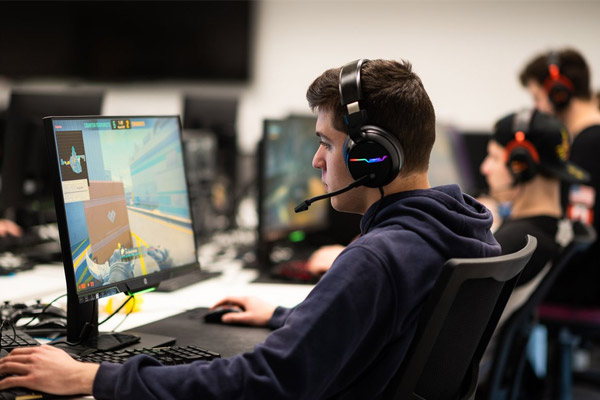
Learning takes place through hands-on projects, collaborative development, creative experimentation and real-world scenarios that reflect current industry practices. You will have opportunities to create your own portfolio of games, work in multidisciplinary teams and apply your knowledge to professional development projects.
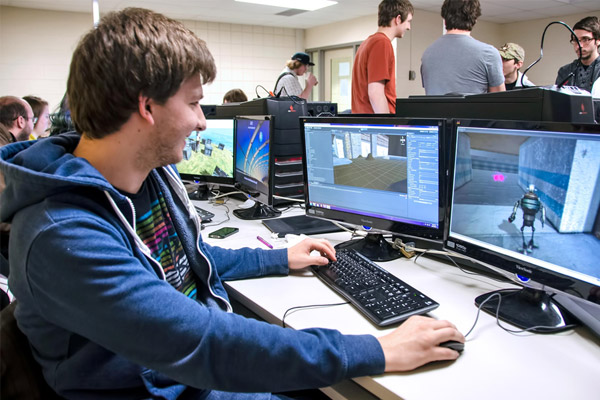
As the gaming industry continues to expand across entertainment, education, healthcare, simulation, virtual reality and augmented reality, graduates with specialist digital games development skills are increasingly in demand. This degree equips you with the technical knowledge, creative confidence and professional mindset needed to succeed in this exciting and innovative sector.
Course Structure
& Modules
Introduction to Games Development Tools
Introduces core coding concepts and industry-standard digital development tools used in games production. Students gain practical experience with software, workflows and problem-solving techniques that support the creation and testing of interactive digital content.
Fundamentals of Games Programming
Develops foundational programming knowledge for games development, covering variables, control structures, functions, data handling and debugging. Students learn to create simple interactive applications while applying logical thinking and computational problem-solving skills.
Fundamentals of Games Design
Explores the principles of effective games design, including gameplay mechanics, player experience, level design, storytelling and prototyping. Students analyse existing games and develop concepts that balance creativity, engagement and usability.
Games Ethics
Examines ethical considerations in games development, including representation, accessibility, player wellbeing, data privacy and monetisation practices. Students evaluate social impacts and apply responsible design principles to create inclusive and ethical gaming experiences.
Learning to Learn for Games Development
Supports the development of independent learning skills essential for higher education and professional practice. Students build confidence in research, reflection, time management, goal setting and academic approaches relevant to games development.
Communication, collaboration and professional practice
Develops effective communication, teamwork and professional skills required within the games industry. Students engage in collaborative projects, explore workplace expectations, and enhance their ability to present ideas and work productively with others.
Introduction to Games Design and Development
Introduces the core principles of games design and development, covering gameplay mechanics, player experience, development workflows and prototyping. Students explore the relationship between design concepts and technical implementation in games creation.
Introduction to Games Programming
Provides an introduction to programming for games, focusing on fundamental coding concepts, problem-solving techniques and interactive systems. Students develop simple games features while learning industry-relevant programming practices and workflows.
Object-oriented Games Development
Explores object-orientated programming principles and their application in games development. Students learn to design reusable, scalable code using classes, inheritance, encapsulation and polymorphism to create more complex interactive games systems.
Introduction to Web Development
Introduces the fundamentals of web development, including HTML, CSS and basic scripting techniques. Students create responsive web content while developing an understanding of user experience, accessibility, and contemporary web design practices.
Working in the Digital and Games Industries
Examines the structure, roles, and professional practices within the digital and games sectors. Students explore career pathways, industry expectations, project workflows, entrepreneurship and the skills required for successful professional development.
Introduction to 3D Modelling and Animation
Introduces the principles and techniques of 3D modelling and animation for digital games. Students create and manipulate assets while developing an understanding of modelling workflows, animation processes and asset optimisation.
Artificial Intelligence for Games
Explores artificial intelligence techniques used in games development, including pathfinding, decision-making, behaviour trees and autonomous agents. Students implement AI systems that enhance gameplay, challenge and player interaction within digital games.
Narrative Games Design
Examines storytelling techniques and narrative structures in games, focusing on character development, world-building, player agency and interactive storytelling. Students design engaging narrative experiences that integrate effectively with gameplay and player progression.
Integrated Group Project
Provides experience of collaborative games development within a multidisciplinary team. Students apply project management, communication and technical skills to plan, develop and deliver a substantial games project from concept to completion.
Games Development Frameworks
Introduces industry-relevant games development frameworks and tools for creating interactive applications. Students learn framework architectures, workflows and implementation techniques to support efficient development, testing and deployment of digital games.
Intermediate 3D Modelling and Animation
Develops advanced skills in 3D asset creation and animation for games. Students refine modelling, texturing, rigging and animation techniques while considering production pipelines, optimisation and visual quality requirements.
Web-based Games Development
Explores the design and development of games for web platforms using contemporary web technologies. Students create interactive browser-based experiences while addressing performance, accessibility, responsiveness and cross-platform compatibility considerations.
The Computing Project
An independent capstone project enabling students to investigate, design, develop and evaluate a substantial games or computing-related solution. The module develops advanced research, project management, problem-solving and professional communication skills.
Advanced 3D Modelling and Animation
Develops advanced techniques in 3D asset production, character creation, animation and visual storytelling. Students create sophisticated games-ready assets while refining technical workflows and applying industry-standard practices for digital content production.
Multiplayer Games Development
Focuses on the design and development of multiplayer gaming experiences. Students explore networking concepts, player interaction systems, synchronisation techniques and performance considerations while creating engaging online or local multiplayer games.
Virtual Reality Systems
Explores the design, development and evaluation of immersive virtual reality experiences. Students investigate interaction techniques, user engagement and emerging technologies while creating interactive applications for virtual and extended reality environments.
New Horizons in Computing
Investigates contemporary developments and future directions in computing and digital technologies. Students evaluate emerging innovations, analyse their potential impact and develop research and presentation skills relevant to industry and academia.
Entry Requirements
Applicants should normally meet one of the following entry requirements:
A-levels DDD.
BTEC Extended Diploma MMP/DM.
International Baccalaureate 24 points.
T-level Merit in any T-level.
Level 3 Key Skills and General Studies will count towards the tariff.
UCAS tariff 72 points.
Work out how many UCAS tariff points you have achieved with the UCAS tariff calculator.
English language requirements
If English is not your first language, IELTS 6.0 overall with a minimum of 5.5 in each element. Find out about the other English qualifications that we accept.
Grades are not the only indicator of your potential or achievement. We take an individual and flexible approach to admissions, attending an interview and assessment day can help us judge your suitability for study if you do not meet these entry criteria.
Course Fee Structure
£9790 GBP
The course fees shown here are what you will pay for the first year of your course if you start in the academic year 2026–27 and you are studying full-time (fee amount is subject to parliamentary approval). You pay fees in each year of your course. The fees you pay may increase each year.
Benefits
Learn with Industry-Relevant Technologies
Develop games using modern programming languages, professional development tools and leading games engines widely used throughout the games industry.
Practical, Project-Based Learning
Gain valuable hands-on experience through individual assignments, collaborative projects and real-world development challenges that build your technical confidence.
Build an Outstanding Portfolio
Graduate with an impressive portfolio of completed games and development projects that showcase your creativity and technical expertise to potential employers.
Develop In-Demand Digital Skills
Strengthen your abilities in programming, problem-solving, software engineering, teamwork, communication and project management.
Expert Academic Support
Learn from experienced lecturers who combine academic excellence with practical industry knowledge, ensuring your learning reflects current professional practices.
Strong Career Preparation
Develop the skills and confidence needed to pursue careers across the games industry, digital media, simulation technologies and interactive entertainment.
Future-Focused Curriculum
Study emerging technologies including artificial intelligence, virtual reality, augmented reality and immersive digital experiences that are shaping the future of interactive media.
Progression Opportunities
Upon graduation, you may choose to enter employment or continue your education through postgraduate study in games development, computer science or related disciplines.
Career Opportunities
Graduates of the BSc (Hons) Digital Games Development programme are well prepared for a wide variety of careers across the creative technology sector. Potential career paths include:
Gameplay
Programmer
Games
Developer
Games
Designer
Technical
Artist
3D Artist and
Animator
AI Programmer
(Games)
Graduates may also progress to postgraduate study or establish their own independent games development studios.
Besides, a graduate in Digital Games Development can also take up careers like: Technical Designer, Software Developer, Graphics Programmer, Gameplay Systems Developer, Virtual Reality (VR) Developer, Augmented Reality (AR) Developer, Interactive Media Developer, Simulation Developer, Mobile Games Developer, Quality Assurance (QA) Engineer, Technical Artist, Indie Games Developer, Games Producer and Technical Project Manager
Semester Dates
Semester
19th October 2026
Welcome Week for new students (October 2026 Intake)
26th October 2026
Start of semester for all current students
21st December 2026 - 3rd January 2027
Winter Break
23rd January 2027
End of semester
Semester
15th February 2027
Welcome Week for new students (February 2027 Intake)
22nd February 2027
Start of semester for all current students
22nd March 2027 - 4th April 2027
Spring Break
5th June 2027
End of semester
Frequently Asked Questions (FAQs)
This degree combines programming, games design and software development to prepare students for careers in the digital games and interactive technology industries.
No. The course begins with fundamental programming concepts before progressing to more advanced development techniques, making it suitable for beginners as well as those with prior experience.
Students gain experience with industry-standard games development tools and engines used for creating modern interactive applications and games.
Yes. Throughout the programme you will develop individual and collaborative games projects, culminating in a substantial final-year games development project.
Graduates can pursue careers in games development, gameplay programming, software engineering, virtual reality, augmented reality, simulation technologies, technical design and interactive media.
The programme uses project-based learning and industry-inspired assignments that reflect professional games development practices and help you build a strong portfolio.
Yes. Graduates may progress to master’s degrees in games development, computer science, artificial intelligence, software engineering or other related disciplines.
You will develop expertise in programming, games design, software engineering, artificial intelligence, teamwork, creative problem-solving, project management and professional communication.
School of Coding offers an industry-focused learning experience that combines practical projects, expert teaching, modern technologies and strong employability support, helping graduates develop the skills needed to thrive in the rapidly evolving games and digital technology industries.
Get in Touch
35 Livery St, Birmingham B3 2PB, United Kingdom
0121 582 4468